New Style: Integrating a Bold Sans Serif into Your Creative Workflow
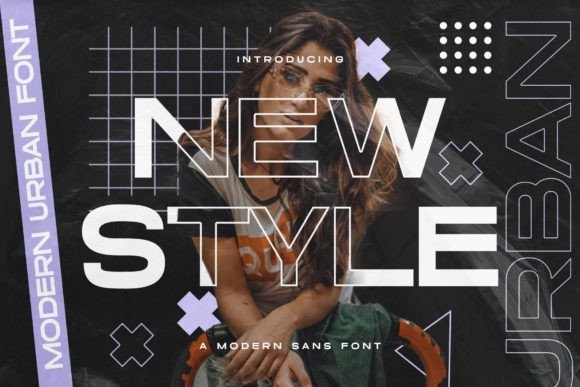
In the realm of design and branding, typography is often the silent workhorse that dictates the tone of a message. While content is king, the vessel that carries that content—the font—determines how it is received. New Style is a specific typographic asset that addresses a common challenge in modern design: the need for high-impact legibility without sacrificing contemporary aesthetics. As an electric and eye-catching sans serif font, New Style features sleek lines and smooth curves, offering a modern look that commands attention. It is designed not just to be read, but to be seen, making it a strategic tool for professionals ranging from marketers to independent creators.
The Anatomy of Impact: Why New Style Works
Understanding the utility of New Style begins with its visual characteristics. It is defined by sharp, bold geometry that stands in stark contrast to softer, rounded typefaces. This sharpness is crucial for digital environments where screen resolution and viewing distance can blur finer details. The "electric" quality of the font suggests high energy and forward momentum, making it particularly effective for brands that want to project innovation or confidence.
Unlike decorative fonts that sacrifice readability for flair, New Style maintains the structural integrity of a sans serif. This means it retains the clean, uncluttered lines necessary for clear communication. However, its "smooth curves" prevent it from looking sterile or robotic. This balance is essential for business owners and marketers who need to appear professional yet approachable. When analyzing the font's anatomy, you are looking at a tool engineered for visual hierarchy—it naturally draws the eye to where it matters most, usually the headline or the call to action.
Strategic Implementation in the Design Process
Integrating a new typeface into a workflow requires more than just a simple download and installation. It requires a strategic approach to ensure the asset serves the project's goals. For graphic designers and content creators, New Style fits best at the top of the visual hierarchy. Its bold presence makes it ideal for headlines, sub-headers, and logo markups. Using it for body text might prove visually fatiguing over long paragraphs due to its high-contrast, eye-catching nature; therefore, understanding its role as a display font is the first step in planning.
Preparation and Asset Management
Before beginning a project, professionals should treat font selection as part of their asset preparation phase. This involves verifying licensing for commercial use and ensuring the font files are installed across all necessary devices, from desktop design stations to mobile preview devices. For teams, this means uploading New Style to shared design libraries (such as Figma, Adobe Creative Cloud, or Canva Brand Kits) to ensure consistency. If the font is being used for web development, developers must prepare the correct webfont formats (WOFF2) to ensure fast load times without compromising the font's sleek rendering.
Workflow Integration: The Drafting Phase
When moving into the execution phase of a project, the interaction between New Style and other design elements becomes critical. Because the font has a strong personality, it requires "breathing room." In layout design, this means utilizing generous white space (negative space) around the headlines to let the sleek lines stand out. Crowding the font with busy background imagery or tight margins will negate its modern appeal.
Consider the workflow of a social media manager creating a campaign. They might start with a template. The integration process involves swapping the default header font for New Style. Immediately, the visual tone shifts from generic to distinct. However, the workflow must also include a check for contrast. Because the font is bold, pairing it with a lighter weight sans serif for body text (like Open Sans or Roboto) creates a necessary visual rhythm. This pairing prevents the design from becoming visually "heavy" and ensures the message remains easy to digest.
Specific Use Cases and Industry Application
The versatility of New Style allows it to serve various functions across different industries. Its application is not limited to static graphics; it extends to dynamic media and print.
- Branding and Logos: For entrepreneurs launching a startup, the logo is the cornerstone of identity. New Style’s sharp and bold appearance makes it suitable for logotypes that need to be scalable. Whether the logo is embroidered on a shirt or displayed as a favicon on a browser tab, the font retains its distinct shape. It suggests a brand that is current and confident.
- Digital Advertising: In the fast-scroll environment of social media feeds, advertisers have milliseconds to capture attention. The "eye-catching" nature of New Style is a tactical advantage here. It can be used for "50% Off" banners or "Learn More" overlays where immediate recognition is required.
- Editorial Design: Publishers and bloggers can use New Style for chapter titles or pull quotes. In a long-form article, a break in the visual monotony using a bold, electric font can re-engage the reader's attention and emphasize key points in the narrative.
- UI/UX Design: While less common for dense interface elements, New Style can be effective for onboarding screens, splash pages, or feature callouts within an app. It signals a transition or a moment of importance within the user journey.
Technical Considerations and Quality Control
Implementing New Style effectively requires attention to technical details that affect the final output. One of the most common pitfalls in using bold, geometric sans serifs is kerning—the spacing between characters. While the font is designed with standard metrics, specific letter pairings (like "AV" or "To") may require manual adjustment in logo design or large-scale print to appear optically even.
Furthermore, color interaction is a vital part of the quality control process. Because New Style has a bold visual weight, it works exceptionally well in high-contrast color schemes—black on white, or vibrant neutrals against dark backgrounds. However, using it in mid-tone colors or over low-contrast images can result in a muddy appearance. During the proofing stage, it is advisable to test the font in both light and dark modes to ensure the "sleek lines" remain crisp and do not bleed into the background.
Long-Term Consistency and Brand Cohesion
For small business owners and freelancers, consistency is the currency of trust. Once New Style is adopted as part of a visual identity, it must be used systematically. This involves creating a style guide that dictates exactly where and how the font appears. For example, a style guide might specify that New Style is used only for H1 and H2 headings in emails and website copy, while a secondary font handles the body text.
Over time, this consistent application helps in building brand recognition. When a client sees a proposal, an email header, or a social media post, the consistent use of New Style creates a subconscious association with the brand's identity. It moves from being just a typeface to becoming a recognizable brand asset. This long-term view is essential for productivity-minded users; by establishing the rule once, you eliminate the decision fatigue of choosing fonts for every new piece of content.
Compatibility and Technical Ecosystems
Finally, no workflow is complete without considering the technical ecosystem. New Style must function across various platforms, from Windows and macOS to iOS and Android. When using the font in office productivity tools (like Microsoft Word or Google Slides) versus creative tools (like Adobe Illustrator), users may notice slight rendering differences.
It is a practical observation that while the font looks stunning in vector-based design software, it must be tested in rasterized environments (like JPEGs or PNGs) to ensure the curves remain smooth at lower resolutions. For web implementation, checking the font's rendering on different browsers (Chrome, Safari, Firefox) is a necessary step in the development workflow. Ensuring this compatibility guarantees that the "modern and stylish look" intended by the designer is exactly what the end-user experiences, regardless of their device.
In summary, New Style is more than a visual embellishment; it is a functional tool for modern communication. By understanding its characteristics, integrating it thoughtfully into design workflows, and maintaining technical rigor, professionals can leverage this font to create designs that are not only beautiful but strategically effective. It serves as a bridge between a brand's message and its audience, ensuring that the message is not just delivered, but remembered.