Roxy: Unleashing Authentic Energy in Modern Design
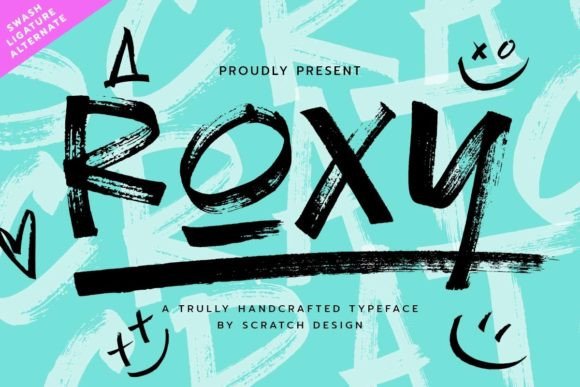
In the vast and often sterile digital landscape of modern typography, finding a font that genuinely captures the raw energy of human expression can be a challenge. While sleek, minimalist sans-serifs have dominated the web for years, there is a growing counter-movement in the design community: a return to the organic, the tactile, and the bold. Enter Roxy, a typeface that does not just sit quietly on the page but demands to be seen. This bold, loud, and proud all-caps font was hand-drawn with an accurate marker, maintaining the authentic high-resolution brush detail in each stroke. It represents a bridge between the imperfect beauty of analog art and the precision required for digital production.
Understanding the Essence of Marker Fonts
To appreciate what makes Roxy unique, one must first understand the psychology behind marker fonts. Typography is not merely about legibility; it is about tone. When a reader sees a font that mimics the texture of a broad-tipped marker or a paintbrush, it triggers a subconscious association with creativity, street art, construction sites, and personal expression. Unlike the rigid geometry of fonts like Helvetica or Arial, marker fonts like Roxy offer a sense of immediacy. They suggest that the message was created by a human hand, not just generated by a machine.
This "human touch" is crucial in an era dominated by Artificial Intelligence. As digital content becomes increasingly automated, audiences are becoming more discerning about authenticity. A font like Roxy, which retains the imperfections of a hand-drawn stroke, signals to the viewer that there is a creative mind behind the design. It adds a layer of warmth and personality that geometric fonts often lack.
The Anatomy of Roxy: Bold, Loud, and Proud
The description of Roxy as "bold, loud, and proud" is not just marketing copy; it is a technical and aesthetic reality. Let us break down the specific characteristics that make this typeface a powerhouse tool for designers.
1. The All-Caps Impact
Roxy is an all-caps typeface. This is a deliberate design choice. All-caps fonts are generally used for headers, logos, and callouts because they create a uniform block of color that draws the eye. They remove the ascenders and descenders found in lowercase letters (like the tail of a 'y' or the top of an 'h'), creating a solid, stable visual foundation. In the context of Roxy, this design choice amplifies the impact of the marker strokes, ensuring that the text feels substantial and commanding.
2. Authentic Marker Texture
The core appeal of Roxy lies in its texture. The font was drawn with an accurate marker, meaning the strokes mimic the pressure and ink flow of a real broad-tipped pen. You will notice where the ink pools at the start of a stroke and where it thins out at the edges. This high-resolution brush detail ensures that even when the font is scaled up to massive sizes for posters or billboards, the texture remains crisp and authentic, rather than pixelated or blurry.
3. Advanced Typographic Features
What elevates Roxy from a simple display font to a professional design asset is its technical depth. It includes ligatures, which are special connections between specific letter pairs. For example, when you type certain letters next to each other, they may merge to create a more natural, flowing cursive look, preventing awkward spacing.
Furthermore, Roxy supports multilanguage characters, making it a versatile choice for global campaigns. It also features unique swashes—decorative extensions of letters that add flair and elegance. These features allow designers to customize the look of the text, ensuring that no two layouts have to look exactly the same.
Practical Applications: Where Roxy Shines
Understanding the features of a font is one thing; knowing how to apply them effectively is another. Because Roxy is a display font (designed for large sizes rather than long paragraphs), its practical relevance lies in grabbing attention immediately. Here is how Roxy fits into modern creative workflows:
- Poster Designs: Posters have only a few seconds to communicate a message. Roxy’s high-contrast strokes and bold presence ensure that the headline is readable from a distance. Whether it is for a music festival, a garage sale, or a motivational quote, Roxy adds an instant "cool factor."
- Album Covers and Merchandise: In the music and fashion industries, branding is everything. Bands and clothing brands often use marker fonts to evoke a sense of rebellion or indie authenticity. Roxy is perfect for merchandise because its texture looks great printed on fabric, giving the design a vintage, worn-in feel even when new.
- Logo Design: A logo needs to be memorable. By using Roxy, businesses can create a wordmark that feels personal and approachable. It works exceptionally well for coffee shops, skate brands, creative agencies, and bakeries—any business that wants to emphasize the "handmade" nature of their product.
- Advertising and Headers: On the web, banner blindness is a real phenomenon. Users scroll past generic ads. Using a distinctive, textured font like Roxy for header text or ad copy can break that pattern, drawing the user's eye to the specific offer or message.
Integrating Roxy into Modern Design Trends
Design trends in 2024 and beyond are leaning heavily into "Maximalism" and "Retro-Futurism." After years of flat design and ultra-thin fonts, audiences are craving visuals that have depth and texture. Roxy fits perfectly into this narrative.
When designing with Roxy, it is important to consider hierarchy. Because the font is so visually dense, it should be used sparingly. If an entire website were written in Roxy, it would be illegible and exhausting to read. Instead, use Roxy for the H1 and H2 headers—the big, punchy statements. Pair it with a clean, simple sans-serif font (like Open Sans or Lato) for the body text. This contrast creates a dynamic visual rhythm that guides the reader's eye naturally from the loud headline to the informative paragraph.
Common Misunderstandings About Display Fonts
A common assumption among beginners is that a "good" font must be versatile enough to be used everywhere. This is a misunderstanding of typographic function. A font like Roxy is not designed to write a novel; it is designed to sell a story.
Another misconception is that hand-drawn fonts are less "professional" than standard corporate fonts. This is false. In the right context, a hand-drawn font demonstrates a higher level of design intentionality. It shows that the designer cared enough about the brand's voice to choose a typeface with personality. However, context is key. Using Roxy for a law firm's legal documentation would be inappropriate, but using it for the law firm's "About Us" page to highlight their passionate advocacy could be a bold, effective choice.
Conclusion: The Power of Authentic Typography
In conclusion, Roxy is more than just a collection of vector paths; it is a tool for communication that carries a specific emotional weight. Its bold, all-caps structure ensures visibility, while its authentic marker texture provides a tactile quality that digital designs often lack. By incorporating ligatures, multilanguage support, and unique swashes, it offers the flexibility required by modern professionals.
Whether you are designing a poster for a local event, branding a new startup, or creating album art for a new release, Roxy provides the strength and outstanding character needed to make your work stand out. In a world that is increasingly digital, Roxy reminds us of the power of the human hand and the boldness of a marker stroke.