The Copra Font: Where Classic Elegance Meets Modern Creativity
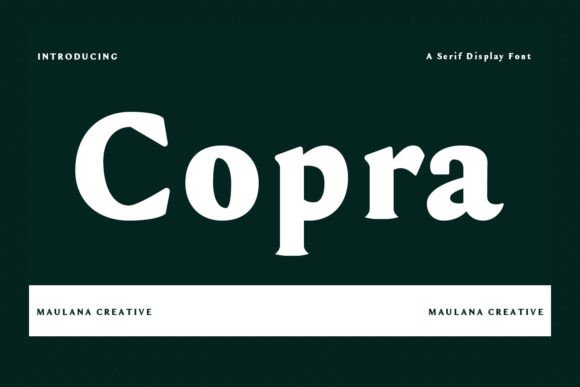
There’s a particular challenge in design that every creative faces: finding a typeface that carries weight, history, and personality without feeling stuffy or outdated. We often look for fonts that command attention—something that feels authoritative on a poster but stylish on a coffee mug. Enter Copra, a modern serif display font that bridges the gap between the traditional gravitas of typography and the fresh, vibrant demands of contemporary design.
If you are looking to inject a sense of heritage into a modern project, or if you simply want your headlines to stop people in their tracks, understanding the nuances of a typeface like Copra is essential. It isn’t just a collection of letters; it is a tool for visual storytelling.
Understanding the "Display" Category
Before diving into the specific characteristics of Copra, it helps to understand its classification. This is a display font. In the world of typography, this distinction is crucial. A text font (like Times New Roman or Garamond) is designed for legibility at small sizes, meant for long paragraphs in books or on websites. A display font, however, is the showstopper. It is engineered to look its best at large sizes.
Think about the typography you see on movie posters, book covers, or the front of a high-end t-shirt. That is the domain of the display font. Copra thrives in this environment. Its letterforms are constructed with a visual impact that might look too heavy in a 10-point footnote, but at 72 points on a banner, it becomes a piece of art.
The Anatomy of Copra: A Modern Serif
Serif fonts are characterized by the small lines or strokes attached to the end of a larger stroke in a letter. For centuries, these were the standard for professional printing. Copra takes this classic structure and refines it for a modern aesthetic.
High Contrast and Sharp Details
One of the most striking features of Copra is its high contrast. This means there is a significant difference between the thickest and thinnest parts of the letter. This gives the font a dynamic, energetic feel. It isn’t a flat, uniform typeface; it has rhythm. The serifs are crisp and sharp, offering a precision that feels contemporary rather than dusty. When you use Copra, you are utilizing a geometry that feels intentional and polished.
The Vibe: Sophisticated yet Approachable
While it is undeniably elegant, Copra avoids the trap of being overly "precious." It has a sturdy foundation that allows it to work in rugged contexts. It can look luxurious on a wedding invitation, but it can also look bold and industrial on a sticker or a skateboard deck. This versatility is its greatest strength. It adapts to the context of the design.
Practical Applications: Beyond the Screen
The true test of a typeface is how well it translates from a digital file to a physical product. Copra shines in this area, particularly because of its strong silhouettes. Here is how you can apply this font to tangible items:
Print and Poster Design
Posters rely on hierarchy. You need a headline that grabs attention from across the room. Copra provides that "visual shout" without screaming. Its tall x-height and condensed options (depending on the specific weight you choose) allow you to stack text vertically, creating a towering impact. Whether you are designing for a music festival, a gallery opening, or a motivational quote for a home office, Copra anchors the layout.
Apparel and Merchandise
Typography on fabric is notoriously difficult. Thin, delicate lines often get lost in the weave of cotton or fade after a few washes. Copra’s structure holds up beautifully on textiles.
- Hats and Beanies: The bold nature of the font makes it perfect for embroidery. The high contrast ensures that the stitching stands out, even on curved surfaces.
- T-Shirts: A single word in Copra across the chest can create a vintage-athletic look or a high-fashion vibe, depending on the color pairing.
- Mugs and Drinkware: Because the letterforms are distinct and well-spaced, the text remains legible as someone wraps their hand around a mug or rotates a tumbler.
Digital Branding and Social Media
In the scroll-heavy world of Instagram or TikTok, static images need to pop immediately. Copra is excellent for creating "thumb-stopping" content. Use it for quote graphics, sale announcements, or YouTube thumbnails. It pairs exceptionally well with clean, geometric sans-serifs. For example, pairing the bold, expressive curves of Copra with a minimalist font like Helvetica or Roboto creates a balanced, professional look that feels very current.
Choosing Copra: What to Consider
Adopting a new typeface into your design toolkit is a commitment. Here are a few factors to weigh when deciding if Copra is the right fit for your project.
Readability at Scale
As mentioned, Copra is a display font. While it is stunning for headers, you should avoid using it for body copy. If you have a paragraph of text explaining product details or terms and conditions, switch to a standard sans-serif or text serif. Let Copra handle the headlines, and let a simpler font handle the heavy lifting of reading.
Licensing and Usage
If you are planning to use Copra for commercial merchandise—like selling those t-shirts or mugs—always verify the license. Most display fonts require a specific commercial license for print-on-demand or physical goods. Ensure you have the rights to use the font in a product for sale to avoid legal headaches down the road.
Color and Texture
Because Copra has such strong visual weight, it can handle complex backgrounds better than thinner fonts. It looks incredible overlaid on textured backgrounds, such as distressed paper or grunge effects. However, be mindful of color contrast. A dark Copra text needs a light background to show off those sharp serifs. If the background is too busy, the fine details of the font might get muddied.
Pairing Strategies
Great design is rarely about a single element; it is about how elements interact. Copra is a strong personality, so it needs a partner that complements rather than competes.
- The Classic Combo: Pair Copra with a humanist sans-serif. The organic curves of the sans-serif will soften the geometric sharpness of Copra.
- The Modernist: Use Copra with a monospaced font (like Courier). This creates a cool, editorial tension between the old-world elegance of the serif and the technical, utilitarian feel of the monospace.
- The Hierarchy: Use Copra for the main title, but use a lighter weight or a different width of the same font family for subtitles. This creates a cohesive system that looks very professional.
The Creative Workflow with Copra
Integrating Copra into your workflow can actually change how you approach design problems. Because the font has such a distinct voice, it encourages you to think about tone immediately.
Imagine you are designing a logo for a new coffee roaster. You open your software and select Copra. Immediately, the design feels artisanal, crafted, and premium. You aren't just typing letters; you are setting a mood. You might decide to track the letters out (increase the spacing) to give it a more airy, luxury feel, or keep them tight for a more urgent, impactful look.
For designers working in Canva, Adobe Illustrator, or Photoshop, Copra installs easily and usually comes with various weights—Light, Regular, Bold, and sometimes Black. Experimenting with these weights is key. A Light weight of Copra can feel incredibly chic and expensive, while a Bold weight feels loud and confident.
Why Fonts Like Copra Matter Today
We live in an era of visual noise. Everyone is creating content, and everyone is trying to stand out. Using generic, system-default fonts is a surefire way to blend into the background. Copra represents a move toward intentional, curated aesthetics.
It signals to your audience that you care about the details. Whether it is on a printed poster, a digital ad, or the label of a product, typography is the "tone of voice" for your brand. Copra speaks with clarity, confidence, and a touch of class. It proves that the old rules of typography can be broken and rebuilt into something that serves the needs of the modern creator.
If you are looking to elevate your next project, consider swapping out your current headline font for Copra. You might be surprised at how much a simple change in typeface can transform the entire narrative of your design.