Understanding Healow: A Practical Guide to This Distinct Brush Font
In the vast landscape of typography, selecting a font is rarely about finding the "best" one in absolute terms. It is an exercise in alignment—matching the visual character of a typeface to the specific message, audience, and context of a project. For designers, marketers, and brand strategists exploring typefaces that convey energy, authenticity, and a human touch, the brush font category often emerges as a compelling direction. Within this category, Healow presents a specific and interesting case study in stylistic choices and their practical implications.
Defining the Core Characteristics of Healow
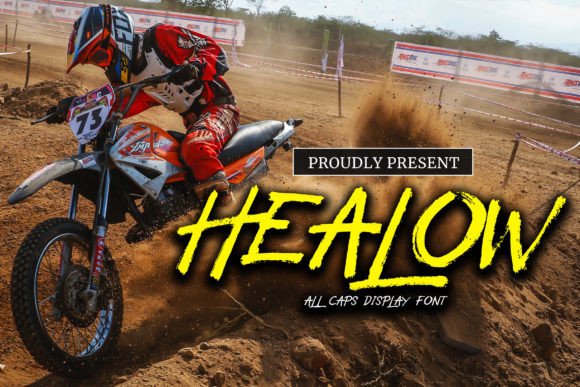
Healow is a brush script font, but its identity is sharpened by several key decisions in its design. The most immediately striking feature is its exclusive use of uppercase letterforms. This is not a typographic afterthought; it is a fundamental characteristic that shapes its entire utility. The letterforms themselves exhibit the organic, slightly irregular texture of hand-brushed strokes, suggesting movement and a natural, crafted quality. However, this naturalism is channeled into a bold, assertive presence through the all-caps structure. The combination creates a font that feels both raw and controlled, energetic yet structured.
This design philosophy positions Healow in a specific niche. It is not aiming for the delicate, flowing elegance of a classic cursive script. Instead, it targets applications where immediate visual impact and a sense of confident dynamism are paramount. The capitalized forms ensure legibility at a glance and project strength, making it suitable for contexts where the text must stand out rather than blend into a lengthy paragraph.
Contextualizing Healow: Strengths and Inherent Tradeoffs
Every typographic choice involves tradeoffs, and understanding these is crucial for effective application. Healow’s strengths are directly tied to its defining features.
Primary Strengths and Best-Fit Scenarios
- High-Impact Branding: The all-caps, brush style is exceptionally well-suited for logos, wordmarks, and monograms where the goal is to create a memorable and energetic brand identity. It works particularly well for brands in the sports, fitness, outdoor adventure, automotive, and entertainment sectors. The font communicates action, adrenaline, and a hands-on ethos.
- Attention-Grabbing Headlines: For posters, event promotions, social media graphics, or website hero sections, Healow can deliver a powerful punch. Its textured appearance adds depth and a human element that can break through the visual monotony of cleaner, geometric fonts.
- Dynamic Advertisements: In advertising copy—especially for short, declarative statements—Healow can inject energy. Phrases like "LIMITLESS PUSH," "DRIVE FORWARD," or "UNLEASH YOUR POTENTIAL" gain added emphasis from the font's stylistic weight.
- Apparel and Merchandise: The style translates well to physical products like t-shirts, hats, and stickers, where the brush texture can add a premium, artisanal feel that resonates with consumers looking for authentic, non-corporate design.
Inherent Limitations and Considerations
The very features that make Healow powerful in certain contexts also define its limitations. The most significant is the lack of lowercase letters. This eliminates it from consideration for any project requiring body text, long-form reading, or nuanced typographic hierarchy that relies on case variation. Attempting to set a paragraph in Healow would be visually overwhelming and functionally illegible.
Furthermore, while the brush texture adds character, it can become a liability in very small sizes or on low-resolution screens, where details may blur. Its stylistic nature also means it carries a strong connotation; using it for a corporate law firm's annual report or a luxury jewelry brand's minimalist website would likely create a dissonant, inappropriate tone. The font itself makes a definitive statement, and that statement must align with the project's core message.
Navigating Alternatives: A Framework for Comparison
When evaluating Healow, it is more productive to compare it to categories and approaches rather than specific named competitors. This helps in understanding the broader decision landscape.
- Other Brush Script Fonts: The market offers a wide spectrum of brush fonts, ranging from very rough, grungy textures to cleaner, more controlled strokes. Some include full lowercase sets and alternate characters for a more handwritten, less uniform look. Healow’s distinction lies in its all-caps mandate and its balance between texture and legibility. If a project requires a softer, more personal handwritten feel for short phrases, a different brush script with mixed case might be more suitable. If the goal is unapologetic, bold impact, Healow’s approach is a strong contender.
- Condensed Sans-Serifs and Bold Display Fonts: For achieving impact and strength without the textured, "human" element, designers often turn to bold, condensed sans-serifs. These fonts offer clean, modern aggression and superior scalability. The tradeoff is the loss of the organic, crafted quality that Healow provides. The choice here is between technological precision and handcrafted energy.
- Handwritten Fonts (Non-Brush): Fonts that mimic pencil, pen, or marker writing offer another form of human touch. These are often more casual, personal, and legible in longer strings than brush fonts. They are better suited for notes, invitations, or brands emphasizing approachability and quirkiness, rather than the athletic, high-energy vibe of Healow.
- Custom Lettering and Illustration: For the highest level of uniqueness, commissioning custom lettering is the ultimate alternative. This allows for perfect tailoring to a brand's identity but involves significantly higher cost and longer timelines. Healow serves as an accessible, ready-made solution that captures a specific, popular aesthetic.
Making an Informed Decision: Key Evaluation Questions
To determine if Healow is the right choice, professionals should move beyond aesthetic preference and ask practical, project-specific questions.
- What is the primary medium? Is the design for digital screens, large-format print, or merchandise? Test the font in the actual intended environment to assess its texture and readability.
- How much text is involved? If the answer is more than a handful of words, Healow is likely the wrong tool. Its role is for short, high-impact statements, not information delivery.
- What is the core brand personality? Does the brand seek to be seen as energetic, rugged, adventurous, and human? Or is it aiming for sophistication, minimalism, or corporate stability? Healow strongly supports the former and conflicts with the latter.
- What is the audience expectation? Would the target audience—whether sports enthusiasts, young consumers, or adventure seekers—respond positively to this style of typography? Does it feel authentic to the space?
- What are the scalability needs? Will the logo need to function as a tiny favicon as well as a massive billboard sign? The brush texture may require careful handling at extreme scales, sometimes necessitating a simplified version for very small applications.
Conclusion: A Tool, Not a Panacea
Healow is a well-defined typographic tool with a clear purpose. It excels at injecting a dose of raw, capitalized energy into designs that demand attention and convey action. Its all-caps, textured brush style makes it a specialist rather than a generalist. For designers and brand builders, its value lies not in being universally applicable, but in being precisely right for a specific set of creative challenges. By understanding its strengths, acknowledging its limitations, and comparing it thoughtfully to the broader typographic ecosystem, you can make a confident, informed decision about whether its unique character is the missing piece in your visual communication puzzle. The most effective typography choices are those made with this level of deliberate, context-aware evaluation.