Craftsman: The Modern Handwritten Font for Authentic Branding
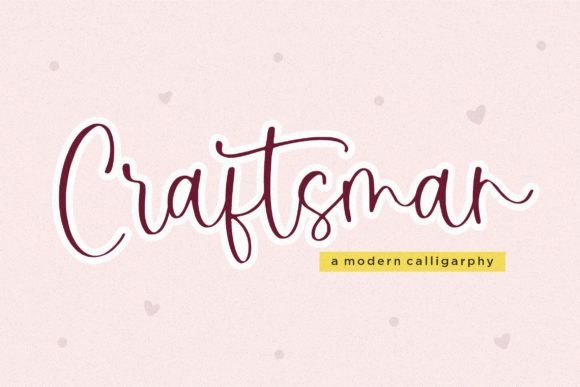
In an era saturated with digital perfection, the human touch has become a valuable commodity. Whether you are designing a logo for a startup, curating a social media feed, or planning a wedding invitation, the typography you choose sets the emotional tone. Enter Craftsman, a modern handwritten font that bridges the gap between casual authenticity and professional polish. Unlike traditional script fonts that can feel dated or overly formal, Craftsman offers a fresh, contemporary aesthetic that speaks to today’s design trends.
The Challenge of Modern Communication
Designers and business owners often face a specific dilemma: how to appear approachable without sacrificing professionalism. Standard sans-serif fonts are clean and legible, but they can sometimes feel sterile or corporate. On the other hand, traditional cursive scripts can be difficult to read or look too casual for high-end branding. Finding a font that balances personality with clarity is essential for effective communication.
This is particularly true in the realm of product packaging. On a crowded shelf, a product has only a split second to grab a consumer's attention. Generic typography can cause a product to blend into the background. However, a font like Craftsman introduces a sense of craftsmanship and care, suggesting that the product inside was made with attention to detail. It creates an immediate emotional connection, which is a powerful driver for purchasing decisions.
How Craftsman Addresses Branding Needs
The primary goal of any branding project is to create a distinct identity. Craftsman helps achieve this by providing a typeface that feels organic and hand-drawn yet remains highly legible. It is not just a font; it is a design tool that adds texture and warmth to digital and print media.
For social media managers, consistency is key. Platforms like Instagram and Pinterest are visual-first environments. Using Craftsman for quote graphics, story highlights, or promotional banners can help unify a feed’s aesthetic. Because it mimics natural handwriting, it feels personal and relatable, which can increase engagement rates. It moves the viewer away from the feeling of being "marketed to" and toward the feeling of having a conversation.
Practical Applications and Outcomes
The versatility of Craftsman allows it to be applied across various contexts. Here is how different users can leverage this typeface to improve their outcomes:
- Wedding Planners and Couples: Wedding stationery requires elegance and romance. Craftsman is perfect for save-the-dates, invitations, and table numbers. It provides a bespoke look that feels custom-made for the couple, elevating the perceived value of the event.
- Product Designers: When designing labels for artisanal goods like coffee, candles, or skincare, Craftsman adds a layer of authenticity. It suggests that the item is small-batch and hand-crafted, even if it is mass-produced.
- Magazine Editors: In editorial design, pull quotes and headers need to stand out. Craftsman can be used to break the monotony of body text, adding a dynamic visual element that guides the reader’s eye through the page.
Implementation and Best Practices
While Craftsman is a powerful asset, proper implementation is necessary to maintain readability and design integrity. Because it is a handwritten font, it works best when used for headlines, subheadings, or accent text rather than long-form body copy. Using a clean, simple sans-serif for the main paragraphs allows Craftsman to shine without overwhelming the reader.
When using Craftsman for branding projects, consider the spacing. Handwritten fonts often benefit from slightly increased letter spacing (tracking) to ensure that individual characters do not collide, which can happen with intricate scripts. Additionally, pay attention to contrast. Craftsman pairs beautifully with neutral backgrounds, allowing the texture of the "ink" to come through clearly.
Different Users, Different Approaches
The application of Craftsman varies significantly depending on the user's specific goals. A social media influencer might use the font in a bold, large size to create impactful statements that stop the scroll. They might pair it with bright colors and playful stickers to emphasize a fun, energetic vibe.
Conversely, a luxury brand might use Craftsman more sparingly. They might choose a lighter weight of the font in a muted color, such as gold foil on a dark background. This approach uses the font to suggest exclusivity and sophistication. The goal here is not just to be read, but to evoke a specific mood of high-end craftsmanship.
Integrating Craftsman into Your Workflow
Adopting a new font into your design workflow should be seamless. Craftsman is designed to be compatible with major design software, making it easy to integrate into existing projects. Whether you are using Adobe Photoshop, Illustrator, or Canva, the font installs quickly and renders smoothly.
For those working on magazine layouts, consider using Craftsman for the masthead or section headers. This breaks up the grid structure of a standard magazine page, adding an editorial flair that feels modern and artistic. It helps in creating a visual hierarchy that is both functional and aesthetically pleasing.
Conclusion
Typography is more than just choosing letters; it is about choosing a voice. Craftsman offers a voice that is modern, authentic, and versatile. Whether you are packaging a product, designing a wedding suite, or building a brand from the ground up, this handwritten font provides the perfect balance of style and substance. By understanding your specific needs and applying Craftsman thoughtfully, you can transform standard designs into memorable visual experiences.