Fislaz: Adding a Handwritten Touch to Modern Design
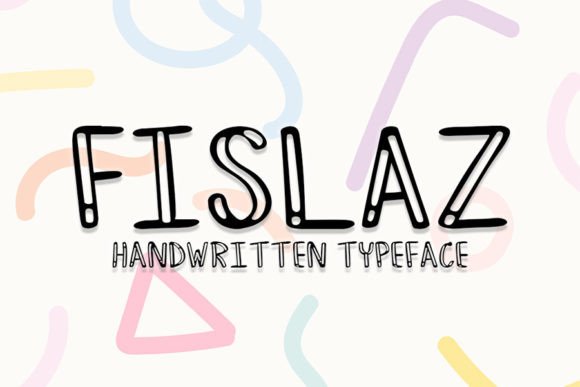
In the realm of digital design, the choice of typography is a critical decision that shapes a project's entire personality. While clean sans-serifs and classic serifs form the backbone of much of our visual communication, there is a persistent and growing demand for typefaces that offer a human, personal element. This is where handwritten fonts enter the conversation, and among them, Fislaz has emerged as a noteworthy option for designers and creators looking to inject warmth and authenticity into their work. It is an eye-catching handwritten font designed to do more than just display text; it aims to convey a feeling, a tone of genuineness that can be difficult to achieve with more conventional typefaces.
The core appeal of Fislaz lies in its ability to bridge the gap between digital polish and human imperfection. In an online environment saturated with automated and overly sleek graphics, a design that feels crafted and personal can stand out significantly. Fislaz provides this quality. Its letterforms are not rigidly uniform; they possess the slight variations and fluid strokes characteristic of natural handwriting. This makes it a practical asset for anyone aiming to create a connection with their audience, from small business owners crafting social media posts to freelancers designing logos for artisanal brands.
Key Characteristics and Design Philosophy
Understanding what makes Fislaz effective requires a closer look at its design. The font typically features a flowing, cursive style with a moderate slant, suggesting movement and ease. The connections between letters are generally smooth, ensuring readability while maintaining a handwritten feel. Unlike some overly casual script fonts, Fislaz is constructed with a degree of consistency. The x-height is balanced, and the weight of the strokes remains fairly even, which prevents the text from looking messy or chaotic when used in longer phrases or sentences.
This balance is crucial. A font that is too erratic can undermine the very professionalism it's meant to humanize. Fislaz navigates this by offering a distinct yet controlled aesthetic. It often includes stylistic alternates and ligatures—alternative characters and letter combinations that can be swapped in to enhance the natural flow of the text. For a designer, this means the ability to customize headlines or logos so they don't look repetitive or generic, adding another layer of bespoke quality to the final output.
Practical Applications and Real-World Performance
Where does Fislaz truly shine? Its strengths are most evident in applications where personality and tone are paramount. Consider its use in branding for a local coffee shop, a boutique clothing line, or a personal blog. The font immediately communicates a sense of approachability and care, suggesting that the product or service behind it is made with attention to detail. On social media, a quote graphic set in Fislaz can feel more intimate and shareable than one using a standard system font.
For marketers and content creators, the font offers a tool for differentiation. An email newsletter header or a promotional graphic using Fislaz can break the visual monotony of a crowded inbox or feed. Educators might find it useful for creating engaging worksheets or presentation materials that feel less sterile and more inviting for students. The key is context. Fislaz performs best when used for display purposes—headlines, titles, logos, and short, impactful phrases—rather than for body text, where its decorative nature could impede readability over long paragraphs.
Evaluating Usability and Flexibility
From a practical workflow perspective, a font's value is also measured by its usability. Fislaz is generally delivered in standard formats (like OTF or TTF), ensuring compatibility with major design software such as Adobe Creative Suite, Canva, and Figma. Its character set typically covers standard Latin characters, numbers, and punctuation, which is sufficient for most English-language projects. The inclusion of stylistic sets, as mentioned earlier, greatly enhances its flexibility, allowing a single font file to serve multiple visual purposes.
However, potential limitations should be considered. The very characteristics that make Fislaz appealing—its flowing, connected letters—can pose challenges in certain scenarios. It may not render well at very small sizes, where the intricate details can become muddled. For digital use, especially on websites, careful consideration of loading times and fallback fonts is necessary, as decorative fonts can be heavier than their minimalist counterparts. Furthermore, its specific style may not be universally appropriate. A corporate legal firm or a fintech startup might find its aesthetic too informal for their primary brand identity, though it could still be useful for internal, less formal communications.
Who Benefits Most from Using Fislaz?
The ideal user for Fislaz is someone who consciously seeks to project warmth, creativity, and authenticity. This includes a broad spectrum of professionals and hobbyists:
- Small Business Owners & Entrepreneurs: Especially those in lifestyle, food, fashion, or craft sectors, where the brand story is deeply personal.
- Freelance Designers & Creatives: Who need a diverse toolkit to offer clients unique visual solutions that break from the corporate mold.
- Bloggers & Content Creators: Looking to develop a recognizable and personal brand aesthetic across their platforms.
- Marketers & Social Media Managers: Tasked with creating engaging, scroll-stopping content that feels human and relatable.
- Educators & Workshop Facilitators: Aiming to create materials that are welcoming and easy to connect with on a personal level.
For these groups, Fislaz is not just a decorative choice but a strategic one. It helps build a visual language that speaks directly to an audience's desire for genuine connection in a digital world.
Making an Informed Decision
Ultimately, integrating Fislaz into a design project should be a deliberate decision. It is a tool with a specific purpose: to add a layer of human touch. Before selecting it, it is wise to define the project's goals and audience. If the objective is to convey sleek, ultra-modern efficiency, other typefaces would be more suitable. But if the goal is to evoke friendliness, creativity, or nostalgia, Fislaz is a strong candidate.
A practical recommendation is to test the font in context. Use it in a mockup alongside other design elements to see if it harmonizes with the overall composition. Pay attention to kerning (the space between individual letters) and leading (line spacing) to ensure optimal readability. Often, pairing Fislaz with a clean, neutral sans-serif for supporting text creates a balanced and professional layout, where the handwritten font makes the headline pop without overwhelming the viewer.
In conclusion, Fislaz represents a thoughtful option within the handwritten font category. It offers a blend of distinctive style and practical consistency that can significantly elevate designs intended for personal connection. While it has specific use cases where it excels and others where it may be less effective, its value for the right project is clear. For designers, creators, and business owners seeking to infuse their work with authenticity and warmth, exploring what Fislaz has to offer is a worthwhile endeavor in the ongoing effort to communicate more meaningfully through visual design.