Lemon Tea: A Comprehensive Evaluation of the Handwritten Font
In the vast ecosystem of digital typography, selecting the right font often feels like a balancing act between personality and professionalism. For designers, marketers, and business owners, the typeface chosen for a project does more than just display words; it establishes the tone, evokes specific emotions, and guides the viewer’s eye. Among the myriad options available, the Lemon Tea font has emerged as a noteworthy contender in the handwritten category. This article provides a detailed, objective analysis of Lemon Tea, examining its design characteristics, practical applications, and overall value for creative professionals.
Understanding the Design Philosophy of Lemon Tea
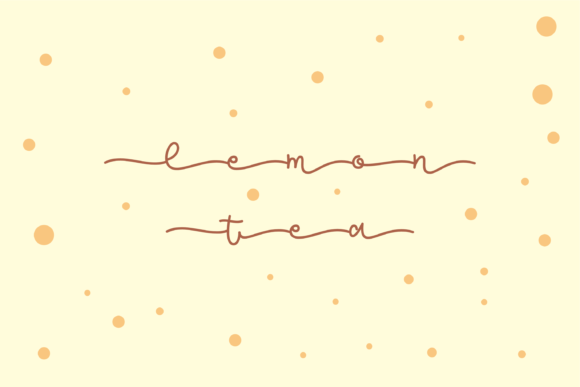
At its core, Lemon Tea is categorized as a handwritten font, a genre that ranges from chaotic scrawl to polished calligraphy. However, Lemon Tea distinguishes itself by occupying a specific, highly functional middle ground. It is best described as delicate, elegant, and flowing. Unlike fonts that attempt to mimic the raw urgency of a ballpoint pen or the rigid structure of a brush stroke, Lemon Tea prioritizes legibility and rhythm.
The design philosophy here focuses on balance. The characters are crafted to look natural without sacrificing the consistency required for professional use. This is a crucial distinction for anyone working in publishing or branding. When we evaluate a font’s "flow," we are looking at how individual letters connect and transition. In the case of Lemon Tea, the connections are smooth, creating a cohesive visual sentence rather than a disjointed collection of glyphs. This fluidity is what gives the font its elegant reputation.
Key Typographic Characteristics
To truly understand the utility of Lemon Tea, one must look closer at its specific features. The font exhibits several technical traits that make it suitable for a wide pool of designs:
- Weight and Stroke: The stroke weight is generally consistent, leaning toward a fine or medium line. This ensures that the text remains readable even at smaller sizes, a common issue with heavier, bolder handwritten fonts.
- Spacing and Kerning: Proper kerning (the space between individual characters) is vital in handwritten styles to prevent overlapping. Lemon Tea appears to be well-balanced, with spacing that allows the text to breathe without feeling disjointed.
- Ascenders and Descenders: The loops of letters like 'l', 'h', and 'g' are elongated and graceful. This adds to the "flowing" nature of the typeface, giving the text a sense of vertical movement.
- Character Set: A practical font must support multiple languages and special characters. Lemon Tea is designed to be versatile, supporting a broad range of glyphs necessary for international projects.
Practical Applications and Usability
The true test of any font is how it performs in real-world scenarios. For the audience of entrepreneurs, freelancers, and educators, a font must do more than look good; it must solve problems. Lemon Tea finds its strength in projects that require a human touch without sacrificing clarity.
Branding and Marketing Materials
For small business owners, particularly those in the lifestyle, beauty, or artisanal sectors, brand identity is paramount. Lemon Tea can serve as a primary logo font or a secondary accent font. Its elegance makes it particularly effective for:
- Social Media Graphics: On platforms like Instagram or Pinterest, where visual appeal drives engagement, a font like Lemon Tea can make quotes, announcements, and overlays feel personal and inviting.
- Packaging Design: Product labels for tea, coffee, stationery, or cosmetics often benefit from a handwritten aesthetic. Lemon Tea provides the sophistication needed to suggest premium quality without looking amateurish.
- Email Headers: In email marketing, standing out in a crowded inbox is difficult. Using Lemon Tea for headers or specific call-to-action phrases can break the monotony of standard serif or sans-serif body text, drawing the reader's attention effectively.
Web Design and Digital Publishing
In the realm of web design, typography plays a massive role in User Experience (UX). While Lemon Tea is likely not suitable for body text—handwritten fonts generally fatigue the eyes when read in long paragraphs—it excels in specific digital contexts.
Web designers can utilize Lemon Tea for pull quotes, hero text, or section headers. When paired with a clean, geometric sans-serif font (such as Montserrat or Lato), the contrast creates a dynamic visual hierarchy. This pairing guides the user through the content, signaling where to look for key information while maintaining a modern, professional aesthetic.
Stationery and Event Design
Beyond the screen, Lemon Tea holds significant value in print. Educators and event planners often require fonts that feel bespoke. Consider the production of wedding invitations, greeting cards, or educational worksheets. A font like Lemon Tea mimics the look of custom hand-lettering, adding a layer of intimacy to the printed material. For educators, specifically, it can be used to create headers for worksheets that feel less rigid and more encouraging for younger students.
Analyzing Strengths and Limitations
No resource is perfect for every situation, and an honest evaluation requires acknowledging both the strengths and the potential limitations of Lemon Tea.
The Strengths: Consistency and Elegance
The primary strength of Lemon Tea is its reliability. Many handwritten fonts suffer from inconsistency—some letters might look great while others appear distorted or out of place. Lemon Tea maintains a high standard of quality across the entire character set. This consistency means designers spend less time manually adjusting kerning and tracking and more time focusing on the overall composition.
Furthermore, its "flowing" nature makes it excellent for conveying warmth. In an era where consumers crave authenticity, a font that looks human-made can bridge the gap between a digital brand and its audience. It feels approachable, which is a valuable asset in customer communication.
Potential Limitations
The main limitation of Lemon Tea is inherent to its style. Because it is a flowing, connected script, it may pose challenges in very small sizes or low-resolution environments. For instance, if used in 10-point font on a low-quality print, the delicate strokes might bleed together, reducing legibility.
Additionally, while it matches a wide pool of designs, it is not universal. It would likely feel out of place in industries that demand high-tech, sterile, or aggressive aesthetics—such as heavy machinery, industrial engineering, or certain fintech applications. In these contexts, the elegance of Lemon Tea might be interpreted as lacking authority or seriousness.
Integration into Creative Workflows
For freelancers and creators, the value of an asset is also measured by how easily it integrates into existing workflows. Lemon Tea is designed to be a workhorse font that is easy to install and deploy.
Pairing Recommendations
To maximize the effectiveness of Lemon Tea, it should rarely be used in isolation. Professional typography almost always involves pairing. Based on the characteristics of Lemon Tea, here are practical recommendations for pairing:
- With Serif Fonts: Pairing Lemon Tea with a traditional serif font (like Playfair Display) creates a classic, editorial look. This is ideal for lifestyle blogs, magazine layouts, or high-end product catalogs.
- With Sans-Serif Fonts: Pairing it with a clean sans-serif (like Open Sans or Roboto) creates a modern, approachable look. This is best for startups, tech blogs with a friendly tone, or personal branding websites.
Technical Considerations
When adding Lemon Tea to a design system, it is important to treat it as a display font. This means restricting its use to headlines, sub-headers, and call-outs. By limiting its use to these elements, you preserve its impact. If overused, the elegance can become repetitive and the text may lose its visual punch.
Furthermore, because it is a flowing script, tracking (the overall spacing of a block of text) may need slight adjustment depending on the background. On busy, textured backgrounds, increasing the tracking slightly can help maintain the clarity of the delicate letterforms.
Who Should Use Lemon Tea?
Determining whether Lemon Tea fits your specific needs depends largely on your industry and audience. Based on this evaluation, the font is best suited for:
- Bloggers and Influencers: Those who need to convey a personal, relatable voice in their graphics.
- Small Business Owners: Particularly in the food, beverage, beauty, or fashion sectors, where branding relies heavily on aesthetic appeal.
- Graphic Designers: Professionals looking for a reliable, elegant script to add to their library for client projects that require a feminine or sophisticated touch.
- Marketers: Those creating seasonal campaigns, holiday cards, or promotional materials where warmth is a key selling point.
Conclusion: A Valuable Addition to the Creative Toolkit
In summary, Lemon Tea stands out as a delicate, elegant, and flowing handwritten font that offers significant practical value. It is not merely a decorative element but a functional tool that, when used correctly, can elevate a design from generic to memorable. Its well-balanced characters ensure that it matches a wide pool of designs, from digital marketing assets to printed stationery.
For professionals aged 20 to 50—whether you are a marketer crafting a campaign, an educator designing materials, or a freelancer building a brand—Lemon Tea offers a way to inject personality into your work without sacrificing professionalism. By understanding its strengths in legibility and flow, and by respecting its limitations regarding size and context, you can add Lemon Tea to your most creative ideas and notice how it makes them come alive. It is a reliable, high-quality asset that warrants consideration in any serious typographic collection.