The Psychology of Connection: How Friendship Shapes Our World
Defining the Bonds That Define Us
Friendship is a fundamental aspect of the human condition, a relationship that transcends biology and economic necessity. Unlike family ties, which are often determined by birth, or romantic partnerships, which carry specific societal expectations, friendship is a voluntary association built on mutual affection, shared interests, and reciprocal support. It is a concept that has evolved significantly throughout history, shifting from ancient philosophical ideals of virtue-based alliances to modern understandings of emotional support systems. At its core, friendship represents a safe harbor—a space where individuals can express their authentic selves without the fear of judgment or the pressure of transactional obligations.
The nature of these bonds varies wildly across cultures and generations. In some contexts, friendship is a casual acquaintance maintained through social media interactions; in others, it is a profound, lifelong commitment that rivals the intensity of marriage. Regardless of the specific definition, the underlying mechanism remains consistent: human beings are social creatures who rely on connection to navigate the complexities of life. This reliance is not merely emotional but biological, deeply embedded in our neurochemistry and survival instincts.
The Evolutionary Advantage of Social Bonds
From an evolutionary standpoint, the drive to form friendships was likely a survival mechanism. Early humans who formed alliances were better protected from predators, more successful in hunting, and more capable of gathering resources. This "safety in numbers" theory suggests that our brains evolved to reward social interaction with pleasurable sensations, primarily through the release of neurochemicals like oxytocin and dopamine. Today, while we may no longer need friends to ward off predators, these biological imperatives remain. The presence of strong social connections is consistently linked to lower stress levels, improved immune function, and increased longevity. Conversely, chronic loneliness acts as a significant stressor, comparable to smoking or obesity in its impact on physical health.
The Architecture of Meaningful Connection
Understanding what makes a friendship "work" requires looking beyond simple proximity. While shared geography often facilitates the initial meeting, it is the psychological architecture of the relationship that sustains it. Three pillars typically support a lasting friendship: reciprocity, vulnerability, and shared history.
Reciprocity refers to the balance of give-and-take. In healthy friendships, the exchange of emotional support, time, and energy is roughly equal over time. While there may be periods where one friend leans heavily on the other, the overall dynamic should not feel one-sided. Vulnerability is the engine of intimacy; it is the willingness to share fears, failures, and insecurities. This openness signals trust and invites the other person to do the same, deepening the emotional bond. Finally, shared history acts as a glue, creating a unique "culture" within the friendship that includes inside jokes, shared memories, and collective experiences that outsiders cannot fully access.
Distinguishing Between Social Circles
It is helpful to categorize friendships to understand their role in our lives better. Sociologists often distinguish between "convenience friends" (those we see due to shared circumstances like work or school), "mentor friends" (those who guide us), and "soul friends" (deep, long-term connections). Recognizing these categories helps manage expectations. Expecting a convenience friend to provide deep emotional support during a crisis may lead to disappointment, whereas relying on a soul friend for that same support is natural. A balanced social life usually includes a mix of these relationship types, providing a robust support network that addresses various needs.
Visualizing Relationships in the Digital Age
In an era dominated by digital communication, the way we express and visualize friendship has changed. We curate online identities, share digital memories, and communicate through visual mediums. This shift has made typography and design essential tools for conveying the nuances of social bonds. When we create content related to friendship—whether it is a blog post about maintaining long-distance relationships, a social media campaign celebrating a holiday, or a personalized photo album—the aesthetic choices we make communicate the tone of the connection.
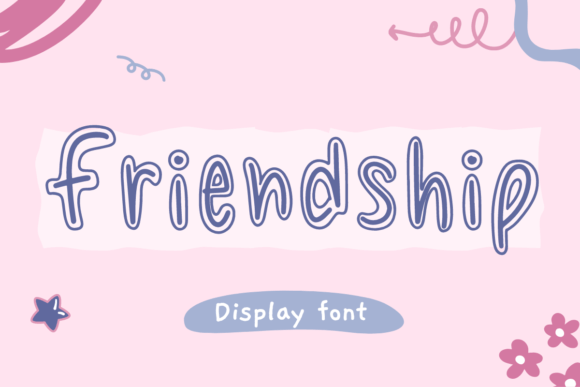
Visual design in this space often relies on warmth, approachability, and personality. A sterile, corporate font might fail to capture the essence of a close-knit group, whereas a typeface with character can evoke the specific feeling of a relationship. For instance, Friendship is a display font suitable for various projects such as blog posts, ads, invitations, greeting cards, planners, photo albums, decorations, and much more. Its stylistic properties make it an excellent choice for creators looking to infuse a personal touch into their work. The visual weight and style of such a typeface can instantly set a mood, signaling to the viewer that the content is personal, celebratory, or heartfelt.
Typography as a Tool for Connection
The choice of typography in design projects is rarely accidental. Designers understand that letterforms carry psychological weight. Rounded, organic shapes are often perceived as friendly and safe, while sharp, geometric shapes can feel modern or aggressive. When documenting friendships through scrapbooking or digital design, the goal is usually to mirror the warmth of the relationship. Using a font like Friendship allows creators to bridge the gap between the emotional content of their message and the visual representation of that message. It adds a layer of authenticity that generic fonts might lack, making the final product feel more bespoke and intentional.
The Practical Challenges of Maintaining Bonds
While the concept of friendship is romanticized in media, the reality requires effort. Adult friendships, in particular, face significant hurdles. As responsibilities mount—careers, families, mortgages—the time available for socializing dwindles. This often leads to the "drift," where friends slowly lose touch not because of a conflict, but simply because of neglect.
Maintaining a friendship requires a conscious investment of time and energy. This often involves navigating the "scheduling gauntlet," where finding a time that works for everyone becomes a logistical challenge. Furthermore, as individuals grow, their values and lifestyles may diverge. A friendship formed in college based on shared hobbies may struggle to survive if one person settles down while the other continues a nomadic lifestyle. Navigating these changes requires adaptability and a willingness to redefine the terms of the relationship.
Conflict Resolution and Boundaries
No relationship is immune to conflict. In fact, the ability to navigate disagreements is a hallmark of a mature friendship. Unlike acquaintances, whom we might simply avoid if a conflict arises, true friends require confrontation and resolution. This involves setting boundaries, communicating needs clearly, and practicing forgiveness. A common misconception is that strong friendships shouldn't require work; in reality, the willingness to do the work is what strengthens the bond. Ignoring issues to "keep the peace" often leads to resentment, which can be more damaging to the relationship than a heated argument followed by reconciliation.
Friendship Across Generations and Cultures
The experience of friendship is not universal; it is heavily influenced by cultural norms and generational attitudes. In some cultures, friendships are deeply integrated into family life, with friends being treated as extended family members. In others, there is a clearer separation between familial duties and social pleasures.
Generational differences also play a role. Older generations often prioritize loyalty and shared history, valuing friends they have known for decades. Younger generations, particularly those raised in the digital age, may prioritize shared values and emotional availability, often forming intense bonds quickly through online communities. However, this can also lead to a perception of disposability, where connections are severed easily if they no longer serve an immediate emotional need. Understanding these nuances is crucial for educators, researchers, and business owners who aim to foster community within diverse groups.
The Role of Friendship in Professional Settings
In the professional sphere, the line between colleague and friend is often blurred. While workplace friendships can increase job satisfaction, productivity, and engagement, they also carry risks. Conflicts of interest, perceived favoritism, and the spillover of work stress into personal life are common concerns. However, the benefits often outweigh the risks. A workplace where employees feel a genuine sense of camaraderie is more resilient to stress and more innovative in problem-solving. For business owners and team leaders, fostering an environment where authentic connections can flourish—without forcing them—is a key component of a healthy organizational culture.
The Future of Social Connection
As we look forward, the landscape of friendship continues to evolve. Technology, while a facilitator of connection, also presents challenges regarding the depth of those connections. The rise of AI companions and virtual reality social spaces introduces new questions about what constitutes a "real" friend. Can a simulated relationship provide the same psychological benefits as a human one?
Regardless of the medium, the fundamental human need for companionship remains unchanged. Whether we are sharing a physical meal, exchanging handwritten letters, or interacting through digital avatars, the drive to connect is intrinsic. For creators, educators, and individuals, the challenge is to cultivate spaces—both physical and digital—that allow these connections to thrive. By understanding the psychology behind our bonds and utilizing the right tools to express them, we can ensure that friendship remains a central, enriching part of the human experience. Add it to any of your designs and enjoy the results, knowing that the visual representation of these bonds is just as important as the bonds themselves.