Unbossy Font: A Practical Guide for Personalized Design Projects
When selecting typography for a creative project, the choice often extends beyond mere legibility. You are looking for a voice, a texture, and a feeling that aligns with your brand identity or event aesthetic. Among the vast library of handwritten scripts available to modern designers, Unbossy has emerged as a notable contender. It is a handwritten script font that promises to bring a relaxed, organic vibe to digital and print media. However, as with any design asset, understanding its nuances, strengths, and limitations is crucial before integrating it into your workflow.
Understanding the Aesthetic of Unbossy
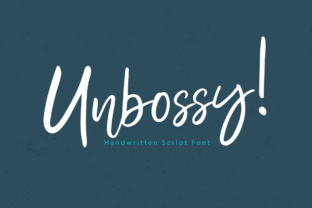
At its core, Unbossy is designed to emulate natural, flowing handwriting. Unlike rigid serif or sans-serif typefaces that prioritize structure, Unbossy focuses on fluidity. The letterforms often feature varying baseline shifts and organic curves, mimicking the imperfections of hand-lettering. This design philosophy makes it particularly effective for projects that require a human touch. It avoids the sterile, corporate feel of standard system fonts, aiming instead for warmth and approachability.
The "unbossy" nature of the font suggests a lack of dominance; it does not scream for attention in the way that bold display typefaces do. Instead, it whispers. This characteristic makes it a strong candidate for supporting text or headlines where the goal is to evoke emotion rather than convey critical data. For instance, in the context of wedding invites, this font style helps set a romantic, intimate tone. It signals to the recipient that the event is personal and carefully curated.
Key Use Cases: Where Unbossy Fits Best
Evaluating a font requires looking at specific scenarios. Based on its design characteristics, Unbossy excels in several distinct areas. It is not a "one-size-fits-all" solution, but for the right project, it can be transformative.
Event Stationery and Invitations
The most common application for a font like Unbossy is in the stationery industry. Beyond wedding invites, it works well for baby showers, milestone birthdays, and boutique event flyers. The handwritten style implies that the invitation was crafted with care, even if it was mass-produced digitally. It pairs well with textured paper stocks, such as cotton or linen, where the ink can interact with the paper's tooth to create a tactile experience.
Digital Branding for Small Businesses
For small businesses, particularly those in the lifestyle, wellness, or artisan sectors, brand voice is everything. Unbossy offers a way to humanize a digital storefront. It is frequently used in blog design for headers, pull quotes, and accent text. A skincare brand or a handmade jewelry shop might use Unbossy to soften their visual identity, making their website feel less like a corporate entity and more like a conversation with a friend.
Social Media and Content Creation
In the fast-paced world of social media, stopping the scroll is essential. Text overlays on Instagram stories, Pinterest pins, and TikTok videos often benefit from the organic look of script fonts. Unbossy can add personality to a quote graphic or a call-to-action, distinguishing it from the standard fonts used by millions of other creators.
Comparative Analysis: Unbossy vs. Other Script Styles
To make an informed decision, it is helpful to understand where Unbossy sits within the broader spectrum of handwritten fonts. Not all scripts are created equal, and the subtle differences can drastically alter the viewer's perception.
Flowing Scripts vs. Bouncy Lettering
There is a popular trend in modern typography known as "bouncy" lettering, where letters dance up and down along an uneven baseline. While Unbossy has organic movement, it generally leans more toward a flowing, connected style rather than a chaotic bounce. This makes Unbossy slightly more legible at smaller sizes compared to highly erratic bouncy fonts. If your project requires a sense of elegance and continuity, Unbossy is likely a better fit than a playful, disconnected marker font.
Modern Calligraphy vs. Casual Handwriting
Unbossy bridges the gap between formal calligraphy and casual jotting. Formal calligraphy scripts often feature high contrast between thick and thin strokes and require specific OpenType features to look realistic. Casual handwriting fonts can sometimes look messy or childish. Unbossy occupies a middle ground—it feels polished enough for wedding invites but relaxed enough for a casual blog post. This versatility is one of its strongest selling points.
Strengths and Tradeoffs
Every typographic choice involves a tradeoff. While Unbossy offers significant aesthetic benefits, it is important to acknowledge its limitations to ensure it aligns with your project goals.
The Strengths
- Personality: It instantly injects character into a design, making it feel bespoke and personal.
- Versatility: It works across various media, from digital screens to printed merchandise.
- Emotional Connection: Handwritten fonts trigger a psychological response associated with human effort and sincerity, which is valuable for personal designs.
The Tradeoffs
- Readability: Like most script fonts, Unbossy is not designed for long-form body text. Using it for paragraphs will cause eye strain and reduce comprehension.
- Rendering Issues: Thin, flowing strokes can sometimes disappear at very small sizes or on low-resolution screens. It requires careful testing on mobile devices.
- Overuse: If used for every element on a page, the design can become visually noisy. It requires a strong, stable partner font (usually a clean sans-serif) to anchor it.
Decision Factors: Is Unbossy the Right Choice?
When you are evaluating resources for your next project, ask yourself these practical questions to determine if Unbossy is the correct tool.
When to Choose Unbossy
You should lean toward Unbossy if your primary goal is to create a welcoming, warm, and fun atmosphere. It is ideal if you are designing for an audience that values authenticity over corporate polish. If you are working on a project like a wedding website, a bakery menu, or a personal portfolio where the "maker" is central to the brand story, this font aligns perfectly with those values.
When to Look for Alternatives
Conversely, you may need a different approach if your project demands high-density information. For technical documentation, legal disclaimers, or data-heavy reports, Unbossy is the wrong tool. In these cases, legibility and neutrality are paramount. Additionally, if your brand identity is strictly minimalist, futuristic, or aggressive, the soft, organic curves of Unbossy may clash with your overall design language. You might opt for a geometric sans-serif or a rigid serif font instead.
Practical Implementation Tips
If you decide to move forward with Unbossy, implementation matters. To get the most out of this typeface, consider the following best practices:
- Pairing is Key: Do not pair Unbossy with another decorative font. Instead, use a clean, geometric sans-serif for body text. This contrast allows the script font to shine without overwhelming the reader.
- Size Matters: Use Unbossy for headers, sub-headers, or accent text. Avoid using it for text smaller than 16px to ensure the handwritten details remain crisp.
- Spacing: Handwritten fonts often benefit from slightly increased letter spacing (tracking) to prevent letters from colliding, particularly if the font includes swashes or loops.
- Color and Background: Because Unbossy has varying stroke widths, it reads best on solid, high-contrast backgrounds. Avoid placing it over busy photographs without a semi-transparent overlay or solid shape behind the text.
Conclusion: A Tool for Lasting Impressions
In the vast marketplace of digital assets, Unbossy stands out as a reliable option for designers seeking a handwritten aesthetic that balances charm with usability. It is not a universal solution for every design problem, but for wedding invites, blog design, and small business branding, it offers a distinct advantage. By understanding its personality and respecting its limitations, you can use Unbossy to create designs that feel authentic, engaging, and ultimately, human. Whether you are a seasoned designer or a business owner crafting your own materials, it is a font worth considering for your toolkit.