Evaluating the Sunday Font: A Practical Look at Its Whimsical Style
In the vast landscape of typography, finding a typeface that strikes the right balance between personality and legibility can be a challenge. While professional environments often demand the neutrality of sans-serifs like Helvetica or the tradition of serifs like Times New Roman, there is a growing demand for typefaces that offer warmth and human touch. This is where handwritten fonts enter the conversation. Specifically, the Sunday font has garnered attention as a charming, fun, and whimsical option. But does it have the versatility to become a staple in your design toolkit? This analysis explores the characteristics, applications, and limitations of Sunday to help you decide if it fits your creative needs.
The Visual Identity of Sunday: Quirky yet Readable
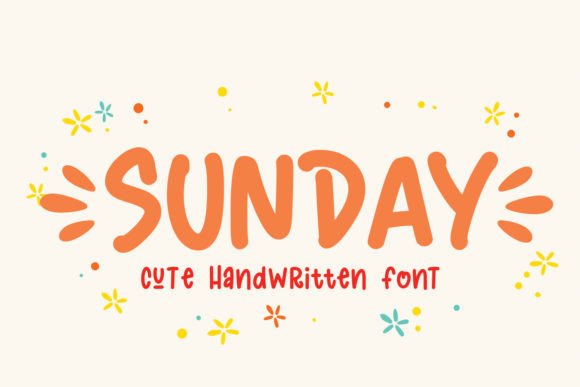
Sunday is categorized as a handwritten font, but it distinguishes itself from the chaotic, illegible scrawls that often plague this category. Its defining characteristic is a "fun and quirky" aesthetic that mimics natural handwriting without sacrificing readability. The strokes possess a certain irregularity that suggests a human element, yet the spacing and baseline consistency are maintained enough to ensure the text remains clear.
When comparing Sunday to standard script fonts, such as formal calligraphy or cursive styles, Sunday feels significantly more relaxed. It avoids the excessive swashes and ligatures that can make script fonts difficult to read at smaller sizes. Instead, it offers a rounded, approachable appearance. For designers evaluating options, this distinction is crucial. If you need a font that feels personal and intimate—like a note passed between friends—Sunday fits the bill. However, if you require the formality of a wedding invitation or the severity of a legal document, this font would likely be viewed as too casual.
Practical Applications: Where Sunday Shines
Understanding where a font performs best is key to evaluating its utility. Sunday is not a "one-size-fits-all" solution, but for specific use cases, it can be the ideal choice. Its primary strength lies in its ability to inject personality into a design without overwhelming the viewer.
Physical Crafts and Scrapbooking
For the crafting community, Sunday offers a distinct advantage. In scrapbooking or card making, the goal is often to evoke nostalgia or warmth. Sunday provides the look of hand-lettering without the permanence or potential for error that comes with actual markers. It pairs well with textured backgrounds and watercolor elements, blending seamlessly into handmade aesthetics. Compared to generic "handwriting" fonts that can look digital or sterile, Sunday retains a whimsical charm that elevates a project from "homemade" to "hand-crafted."
Digital Designs and Social Media
In the realm of digital content, particularly social media graphics and blog headers, Sunday can serve as an excellent accent font. It is effective for short, punchy headlines or call-out quotes where you want to grab attention through style rather than size. However, it is important to consider the medium. On high-resolution screens, the quirks of the font are visible and charming. On smaller mobile screens, very intricate handwritten fonts can sometimes blur together; Sunday, with its relatively clean lines, holds up better than many competitors, but testing is still recommended.
Presentations and Educational Materials
While it may seem counterintuitive to use a whimsical font in a presentation, there are scenarios where Sunday is effective. In educational settings, particularly for younger audiences or casual workshops, a rigid, corporate font can create a barrier. Sunday can make content feel more accessible and less intimidating. It is particularly useful for slide headers or annotations that require a personal touch. That said, for data-heavy slides or formal business pitches, sticking to professional sans-serifs is generally the safer, more credible choice.
Comparative Analysis: Sunday vs. The Alternatives
No font exists in a vacuum. When deciding to use Sunday, it is helpful to compare it against the broader categories of handwritten and display fonts.
Legibility vs. Style: Many handwritten fonts prioritize style to the point where they become dingbats—unreadable without context. Sunday strikes a middle ground. It is more legible than "grunge" or "scratchy" handwriting styles but less formal than "cursive" or "calligraphic" styles. If your project requires a paragraph of text, Sunday is likely a better option than a highly stylized script, though it may still fall short compared to a humanist sans-serif like Open Sans for extended reading.
Modern vs. Traditional: Sunday leans towards a modern, playful aesthetic. It lacks the heavy serifs or gothic undertones of traditional fonts. If your design project is targeting a retro or vintage vibe, Sunday might feel out of place. In that scenario, a serif font with texture or a typewriter style would be a more appropriate alternative.
Commercial vs. Personal Use: When looking at the market, there are thousands of free handwritten fonts available. However, many free options lack the kerning (spacing between letters) and ligature support that professional projects require. Sunday is often positioned as a premium or well-crafted option, meaning it typically offers better technical consistency than random freeware downloads. This consistency is what allows it to be used confidently in professional branding without looking sloppy.
Evaluating Strengths and Limitations
To make an informed decision, one must weigh the pros against the cons. Sunday offers a specific set of benefits that come with inherent tradeoffs.
- Strengths: The font excels at conveying emotion. It is inherently friendly and disarming. It works exceptionally well for branding that wants to appear approachable, such as bakeries, lifestyle blogs, or boutique shops. It also offers versatility in pairing; it often looks good when paired with a simple, bold sans-serif for contrast.
- Limitations: The primary limitation of Sunday is its context. It is not designed for body copy. Attempting to read a 500-word article in Sunday would be fatiguing for the reader. Furthermore, its "quirky" nature means it may not convey authority or seriousness. If you are designing for a law firm, a medical provider, or a financial institution, Sunday would likely undermine the trust you are trying to build.
Decision Factors: Is Sunday the Right Choice?
Choosing a font is ultimately about aligning the tool with the message. Before incorporating Sunday into your project, consider the following questions:
- Who is the audience? If your audience expects professionalism and corporate structure, Sunday is likely the wrong fit. If they value creativity, warmth, and a personal touch, it is a strong contender.
- What is the medium? Sunday works beautifully for print-on-demand products, greeting cards, and digital headers. It performs less reliably in dense text environments or low-resolution prints where fine details might be lost.
- How does it pair? Rarely does a font work entirely alone. Consider what you will pair with Sunday. It usually requires a "grounding" font—a simple serif or sans-serif—to handle the heavy lifting of information, while Sunday handles the emotional appeal.
Conclusion
Sunday is a charming, whimsical handwritten font that fills a specific niche in the designer's toolkit. It is not a replacement for standard text fonts, nor is it trying to be. Instead, it serves as a powerful tool for adding personality, warmth, and a human touch to designs ranging from scrapbooks to social media graphics. By understanding its strengths in legibility and its limitations in formal contexts, you can confidently decide if Sunday is the right asset to brighten up your next creative project.